There was a time when the first thing people did after unboxing a MacBook was partition the drive and install Windows. Boot Camp was a selling point. Apple built the tool right into macOS, provided the drivers, and effectively told buyers: "Go ahead, run Windows. We know you need it." And they did. Because in 2010, macOS was a nice place to visit, but Windows was where the work happened.
That era is gone. Not because Apple blocked it. Because nobody needed it anymore.
The Web Ate Windows' Moat
For years, the argument for Windows was simple: that's where the software runs. Business apps, productivity suites, industry tools. If you had a job that involved a computer, you probably needed Windows. macOS was for designers and film students. Everyone else ran Windows because they had to.
Then the software moved to the browser.
Office 365 made Microsoft's own flagship suite available on anything with a web browser. Google Workspace did the same from the other direction. Figma replaced desktop design tools. Slack replaced whatever internal chat client IT had deployed. Project management moved to Jira, Asana, Monday. Accounting went cloud-hosted. CRMs live entirely in the browser. Even niche industry tools started offering web portals.
Every one of those is one fewer reason to care what OS is underneath. Windows' moat didn't get breached by a competitor. It evaporated. The applications people depended on stopped caring about the operating system, and once that happened, the OS had to stand on its own merits.
That's where things got interesting.
Apple Played the Long Game
Apple didn't stumble into this. They spent years building toward it, deliberately and patiently.
macOS never chased trends the way Windows did. There were no radical redesigns that broke muscle memory. No features that existed to justify a press release. Apple refined what was already there. The Finder stayed the Finder. The dock stayed the dock. The core experience remained consistent across releases, and that consistency compounded over time into something valuable: trust. You updated your Mac and it still felt like your Mac.
Sure, not everyone liked Liquid Glass, and it did take a bit more resources to run those beautiful glassmorphic effects. But I didn't see the iconic Apple button appear at the center of the screen all of a sudden, nor did I have to finesse my way back to the Control Panel because I couldn't find a crucial setting in the Settings app.

Under the hood, macOS sat on Unix. That mattered more than most people realized. When the development world shifted toward web development, containers, and command-line tooling, macOS was ready. Homebrew gave Mac users a package manager that felt native. Terminal was always there. The gap between "developer machine" and "business machine" closed because macOS was both without asking you to choose.
Then came Apple Silicon.
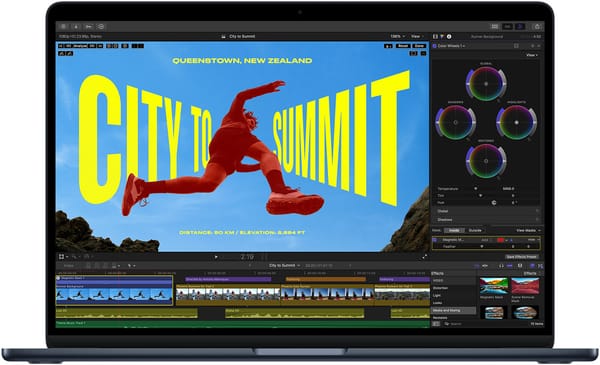
The M1 wasn't a spec bump. It was Apple cashing in on over a decade of chip design from the iPhone and iPad, applied to a full computer. Battery life doubled. Performance jumped. Fan noise disappeared on most models. The MacBook Air became a machine that could compile code, edit video, and run all day on a single charge without breaking a sweat. The transition plan from Intel was mapped out years in advance. Rosetta 2 handled the translation layer so well that most users never even noticed they were running software built for a completely different architecture.

None of this was accidental. Every piece built on the last. The hardware investment made the software investment land harder, and the software investment made the hardware worth buying. Apple played the long game, and it paid off.
Why Windows on ARM Can't Keep Up
Microsoft saw the same shift and tried to follow. Windows on ARM was their answer to Apple Silicon, a reactive move to prove that Windows could run on ARM too. The result has been underwhelming. Translated x86 apps break or crawl. Efficiency and performance are still miles behind what Apple ships in a fanless MacBook Air. And despite years of effort from Microsoft's closest hardware partners (Dell, HP, Lenovo), nobody has managed to put together a Windows on ARM laptop that anyone actually wants to buy. The problem isn't the chip. It's that Microsoft doesn't control the stack. Apple designs the silicon, writes the OS, builds the hardware, and ships the translation layer. Microsoft writes the OS and hopes everyone else figures out the rest. Vertical integration isn't just a buzzword. It's why Rosetta 2 works and Prism doesn't.
The translation layer difference deserves a closer look, because it reveals just how much vertical integration matters at a technical level.
When Apple moved from Intel to ARM, they had a crucial advantage: they controlled the development toolchain. macOS apps are built with Xcode, against Apple's own frameworks like AppKit, Core Data, and Metal. Apple knows exactly what system calls these apps make, what libraries they link against, and how they interact with the OS. When they built Rosetta 2, they weren't translating arbitrary x86 code in the dark. They were translating a known ecosystem of applications built on their own APIs. The translation target was well-defined, and Apple could optimize for the patterns that actually mattered.
Apple also had practice. They'd done this before, moving from PowerPC to Intel in 2006 with the original Rosetta. They knew what worked, what didn't, and how to push developers toward universal binaries so the translation layer was a bridge, not a crutch.

Windows has none of these advantages. Win32 apps are a wild west. Developers link against every library imaginable, call undocumented APIs, hook into kernel-level drivers, and do things with memory that no translation layer can anticipate. Anti-cheat software talks directly to hardware. Legacy enterprise apps depend on specific x86 behavior at the instruction level. DRM schemes assume they know what CPU they're running on. The Windows app ecosystem wasn't built on a controlled set of frameworks. It was built on decades of "anything goes," and translating "anything goes" is an exponentially harder problem than translating a curated ecosystem.
That's why Prism stumbles where Rosetta 2 succeeds. It's not that Microsoft's engineers are less talented. It's that they're trying to translate a universe of software they never controlled in the first place, while Apple only had to translate software built on foundations they designed.
Here's the irony: Microsoft actually tried to fix this. UWP (Universal Windows Platform) was supposed to be Windows' answer to Apple's controlled app ecosystem. A modern, sandboxed framework with a curated app store, consistent APIs, and apps that could run across Windows devices. If it had succeeded, Microsoft would have had the same advantage Apple enjoys: a known set of frameworks to optimize for, a predictable translation target, and a clean path forward for ARM.

But Microsoft, yet again, fumbled the execution. UWP apps were sandboxed in ways that felt restrictive without feeling protective. The API surface was limited compared to Win32, so developers couldn't do things they were used to doing. The Windows Store was a ghost town of low-effort clones and ad-riddled junk. Microsoft couldn't even convince their own teams to go all-in: Office stayed Win32, Visual Studio stayed Win32, most of Microsoft's flagship products never made the jump. If Microsoft won't build for their own platform, why would anyone else?
Developers voted with their feet. They stuck with Win32 because it worked, because it had decades of documentation and Stack Overflow answers, and because UWP offered them nothing worth the rewrite. UWP quietly faded into WinUI 3 and the Windows App SDK, yet another half-pivot that tried to bridge the old and new worlds without fully committing to either.
This is the road not taken. If UWP had succeeded, Windows on ARM might actually work today. Microsoft would have had a controlled ecosystem to translate, just like Apple does. Instead, they're stuck trying to translate thirty years of ungoverned Win32 chaos through Prism, and the results speak for themselves.
Windows Can't Get Out of Its Own Way
While Apple was compounding investments, Microsoft spent the same years making Windows harder to like.
It started small. Suggested apps in the Start menu. Prompts to switch your default browser to Edge. Bing search results injected into the taskbar. Each one individually minor. Each one a small signal that Microsoft viewed Windows not as a product to be proud of, but as a distribution channel for services.
Then it got worse. Windows 11 arrived with hardware requirements that locked out perfectly capable machines, offering in return a centered taskbar and rounded corners.
Microsoft has a habit of reinventing things and somehow making them worse each time. The command line went from CMD to PowerShell, a language so verbose that every command reads like a legal document. Get-ChildItem -Path C:\ -Recurse -Filter *.log | Where-Object { $_.LastWriteTime -lt (Get-Date).AddDays(-30) } | Remove-Item -Force. That's "delete old log files." On a Mac or Linux box, you can type that half-asleep. I was a sysadmin for a sizable company. PowerShell was the single thing I hated most about the job.
The browser went from Internet Explorer to Edge (EdgeHTML) to Edge (Chromium), effectively admitting defeat twice. The Settings app was supposed to replace Control Panel and never finished the job. Cortana was supposed to compete with Siri and got quietly removed.
There was a time when people were genuinely excited for the next Windows release. New features, new capabilities, a reason to upgrade. Now the reaction is "what's going to break this time?" That shift didn't happen overnight. Microsoft earned it well, one botched reinvention at a time.
The forced Microsoft account requirement during setup was particularly tone-deaf. Users who wanted a local account had to resort to workarounds that Microsoft actively tried to close. Your computer, their terms.
Copilot arrived not as something useful you could discover on your own, but as something shoved into the taskbar, the Start menu, the right-click context menu, and every surface Microsoft could find. Recall, a feature that literally screenshots everything you do, launched to immediate and justified privacy backlash. These weren't features designed for users. They were features designed for Microsoft's quarterly earnings narrative.

The tragedy is that Microsoft has the resources, the talent, and the install base to make Windows genuinely great. They keep choosing not to. Every release cycle brings features that serve Microsoft's priorities while the basic experience, the thing people interact with every single day, stays inconsistent and increasingly cluttered. It's not a lack of capability. It's a lack of focus and a fundamental lack of respect for the people sitting in front of the screen.
The Linux Escape Hatch Doesn't Work
The common rebuttal when someone complains about Windows is "just install Linux." And honestly, on a lot of Windows laptops, Linux does run better. I wrote an entire blog post about switching to CachyOS on a mini PC and watching idle power draw drop, apps launch faster, and the whole system feel unburdened in a way Windows never did. Fewer background processes, no ads, no forced restarts mid-presentation. I love it.
But Linux isn't a real answer for most people. The front desk receptionist who lives in Outlook and Excel, with her Plantronics headset wirelessly connected to her Cisco phone, ready to dial and page someone over the intercom. The accountant running QuickBooks, probably still printing checks on a proprietary dot matrix check printer made in the '90s. The department head who just needs their laptop to work when they plug a projector in and pick up that Bluetooth clicker. These people aren't going to troubleshoot a Wi-Fi driver, figure out why their headset won't pair, or debug why the projector shows a black screen. They shouldn't have to. They use their computer to do business work, and business work has never been Linux's strong suit.
This is where Apple quietly won. A MacBook is approachable enough for the receptionist, capable enough for the developer, and polished enough for the executive. Apple didn't make a good OS for tech people who tolerate rough edges. They made one that everyone in a business can pick up and use without filing a support ticket.
That's the gap Microsoft should have owned. They had the enterprise relationships, the Office suite, the IT infrastructure. Instead of making Windows better for the people who actually use it, they spent their energy on Copilot integrations and advertising hooks. Apple filled the vacuum by simply making a computer that respects its user's time.
Time and Dedication
The lesson here isn't really about Apple versus Microsoft. It's about what sustained investment looks like versus what coasting looks like.
Apple decided years ago that the Mac experience should be good enough that nobody would want to run a different OS on it. They invested in hardware, software, and silicon to make that happen. It took time. It took patience. It took saying no to short-term monetization tactics that would have undermined the experience they were building.
It's easy to forget how much work Apple put into the iPhone. It launched in 2007 with no App Store and no SDK. Just a phone, a browser, and a vision. But what a vision. A capacitive multitouch display when everyone else was using resistive screens and styluses. Pinch to zoom, smooth scrolling, a web browser that rendered full desktop pages. BlackBerry had a tiny screen with a physical keyboard. Symbian needed a stylus. Windows Mobile had cramped UIs designed for enterprise, not humans. Everyone mocked the lack of a keyboard. Then everyone copied the design within two years.

A year later, Apple shipped the SDK and App Store, and the entire mobile industry changed overnight. BlackBerry's entire empire was built on BBM and push email through BES. That was the thing nobody could leave BlackBerry for. Then the App Store opened, and suddenly it wasn't that hard to live without BBM after all. WhatsApp showed up in 2009, just a year after the App Store launched, and did everything BBM did on any phone with a data connection. The thing BlackBerry spent years building into proprietary hardware, a couple of developers in Mountain View replicated as an app. Apple didn't need to build their own BBM. They built the platform and let someone else do it better.
That's the compound effect of good infrastructure. That same philosophy carried over to the Mac. Apple doesn't ship features in isolation. They build the foundation first, then the feature, then the experience around it. By the time you see the result, the groundwork has been in place for years.
Microsoft decided that Windows' dominance was self-sustaining, just like BlackBerry did when they had BBM. That the install base was the product, not the experience. That they could add ads, push services, and cut corners on polish because where else were people going to go?
Now we know the answer. They went to the Mac, and they're not coming back. Not because Apple did anything flashy. Because Apple did the work, year after year, and it paid off.
Time and dedication shape user behavior. They always do. Remember when BlackBerry and Nokia mocked the keyboardless iPhone? Where are they now?
https://www.reddit.com/r/mctk/comments/1rqy9ei/nobody_puts_windows_on_a_mac_anymore/